

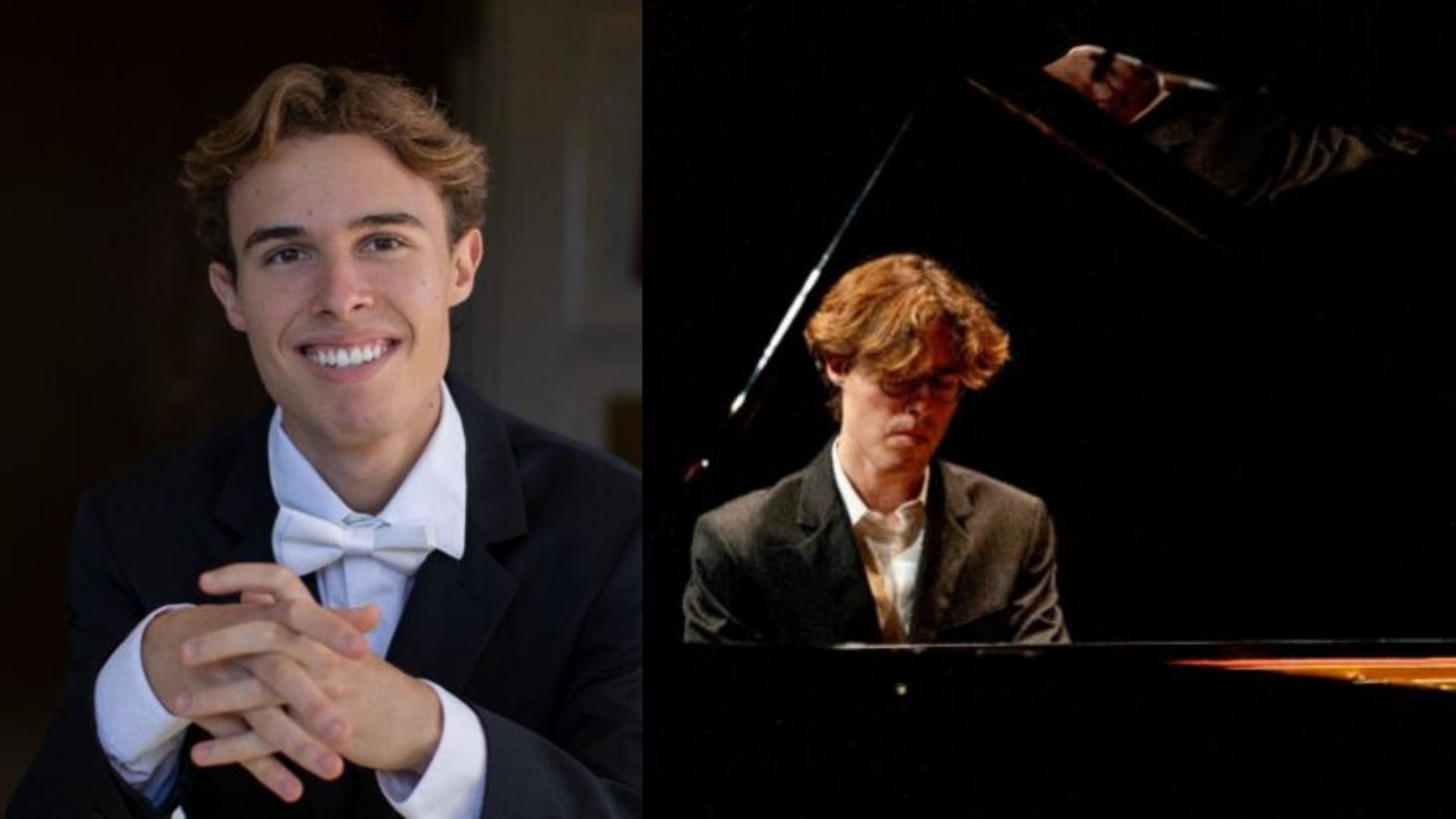
Ao enumerar suas atividades de lazer, o nosso entrevistado se definiu como um “flâneur”.
Um flâneur é uma pessoa que caminha sem pressa e sem destino fixo pelas ruas de uma cidade, observando a vida urbana, as pessoas e a arquitetura ao redor. É guiado pela curiosidade. Enxerga poesia e arte nos detalhes comuns do dia a dia. Gosta de se misturar às pessoas e observar o movimento sem participar diretamente dele.
Mas ao observar o percurso incomum que já fez Mateus Fonseca Junqueira, um jovem pianista, de 25 anos, em busca de aprimorar suas habilidades, diríamos que há um planejamento minucioso por excelência.
Vejam o que ele nos contou:
Eu venho de uma família de médicos. São mais de 14 médicos, se não me engano. O meu avô foi um dos fundadores do Hospital Arapiara, que existiu aqui por muito tempo. E foi um grande exemplo pra família. Então depois dele, vários médicos.
Eu tinha três tias que tocavam piano. E desde pequenininho gostava muito de ouvir, tinha curiosidade. Às vezes ia ali tocar um pouquinho. Aprendi algumas musiquinhas com elas. E quando eu tinha 10 anos, a minha mãe falou…
“Ah, filho, faz alguma aula de algum instrumento, escolhe algum instrumento”,
porque eles achavam importante para o desenvolvimento da criança, da capacidade da imaginação. E aí, como eu estava ali naquele ambiente com piano, eu falei que morria de vontade de aprender piano. Minha família me apoiou muito desde cedo. Me falaram:
“Se você quer estudar música, você tem que ir para o melhor lugar, prá ser um músico de qualidade!’.
Me deram a maior força. Meu pai, Rui Carneiro Junqueira, é engenheiro e minha mãe, Ana Paula Coutinho Fonseca, é médica, fisiatra. Meu irmão, Gabriel, de 22 anos, está seguindo a medicina na Universidade Federal de Minas Gerais. A música e a medicina frequentemente estão ligadas!
Eu moro atualmente em Leuven, na Bélgica. Fica pertinho de Bruxelas, na parte flamenga da Bélgica. É uma universidade secular, completou 600 anos agora, uma das mais antigas da Europa. E a universidade de música é acoplada à universidade, mas é uma instituição à parte.
Em 2025, ele concluiu com distinção o mestrado em Performance de Piano, sob orientação da renomada pianista Sylvia Thereza, após interpretar o 4º Concerto de Beethoven e regê-lo do piano, na LUCA School of Arts, em Leuven. Atualmente prossegue sua formação artística, na mesma instituição, com um segundo mestrado em Música de Câmara e Regência que tem a ver mais com o coletivo. Com fazer música em grupo.
O Começo
Até a adolescência Mateus conciliou a educação formal e estudos musicais. Na Escola Santo Tomás de Aquino, onde esteve de 2005 a 2018, passou a infância e a adolescência. Sempre se manteve atento às matérias curriculares e à vivência prática com a partitura e o teclado. Participou de variadas atividades como “Olimpíada Brasileira de Astronomia e Astronáutica”(2015), “Projeto de Responsabilidade Social Velha Infância” (2016), “Olimpíada Brasileira deFísica” (2016 e 2017), “Laboratório de Morfologia Vegetal” (2017).
E era assim, no começo era mesmo uma coisa mais informal, mais para lúdica, é. Eu gostava também de improvisar. Quando tinha 12 anos fiz umas composições, comecei a escrever… Então tem algumas partituras que eu ainda tenho, né, da época. E era isso. E eu conciliava com a escola, eu tinha aulas semanais assim.
Dos 14 para 15 anos, começou a ter mais interesse pela música clássica, porque acompanhou pela Internet o Concurso Chopin, de Varsóvia. E a obra de Chopin, foi sua porta de entrada para a música clássica. Ficou deslumbrado com aquilo.
Então teve vontade de estudar mais, para poder tocar também obras de outros compositores, oque abriu mesmo o seu interesse. E foi procurar professores, procurar caminhos para aprofundar sua experiência.
Primeiro eu fui aluno da professora Carla Reis, que é da Universidade de São João Del-Rey.
Então tive aulas particulares com ela desde os 14 anos até quase a minha ida para a Europa.
A Importância Da Fundação de Educação Artística
E, em paralelo, eu conheci a Fundação de Educação Artística (FEA), que para mim, foi como uma segunda casa. Estudei lá de 2017 a 2019. Meu primeiro contato com a Fundação foi uma oficina de música contemporânea. Com o Sérgio Rodrigo. É compositor, atualmente está morando na França, em Estrasburgo. Então isso me marcou, foi bem significativo.
É uma escola muito aberta. Estudei piano, harmonia, contraponto, audição e solfejo. É como se fosse uma encruzilhada de muitos tipos de música: popular, chorinho, contemporânea, clássica… Se mistura, as pessoas se conhecem. Celebrando a música, a vida.
Acompanhava todos os concertos. Ia a três concertos por semana, pelo menos. Isso é uma maravilha, que a gente tenha essa oportunidade aqui em Belo Horizonte.
Fui para a música clássica. Foi ali que começou o meu interesse pela música contemporânea.
Participei de um festival, a Semana Internacional de Piano de Óbidos, uma vila medieval em Portugal, em julho de 2018. Naquela edição participaram 40 jovens, de todo o mundo, tendo aulas diárias com cinco grandes pianistas. Eu fiquei deslumbrado com essa vivência. Pude conhecer um pouco da filosofia dos professores, conversar com amigos, outros colegas pianistas, como era a experiência deles lá. Isso me deu vontade de estudar no exterior, na Europa especialmente, por ser o berço da cultura da música clássica.
Eu sempre falo: se eu fosse estudar samba, eu nunca sairia daqui! Mas para a música clássica é preciso ir às raízes. Esse foi o meu intuito. E então comecei a procurar e, em 2018, num concerto aqui na Sala Minas Gerais, eu conheci o meu futuro professor, o exímio pianista Ricardo Castro, que veio tocar.Ele me instruiu de como era o processo para ingressar nas universidades lá, o repertório que eu deveria preparar, qual o nível esperado: prova prática, prova teórica de conhecimentos gerais, solfejo, percepção musical…
Fiz aqui, um ano de preparo intensivo, após a conclusão do ensino médio, orientado pela professora Carla Reis, por Rubner de Abreu, Rufo Herrera e pela pianista Berenice Menegale, na Fundação de Educação Artística. Então foram essas pessoas que me auxiliaram muito e que eu sou eternamente grato, porque é um ensino de altíssima qualidade. Isso eu pude constatar cada vez mais, mesmo estando lá no exterior, vendo pessoas de vários outros lugares. O ensino que eu recebi pela Fundação de Educação Artística não tem igual.
E sou muito grato por ter tido essa oportunidade. Porque é um ensino que vem do fazer coletivo da música, a gente vai aprendendo improvisando juntos, sentindo no corpo, cantando. Então não é só tocar piano dos dedos para fora, é você introjetar a música, sentir os afetos de cada nuance do som, né? Isso eu desenvolvi na Fundação.
E daí eu já me mudei prá Europa. Fiz minha graduação, na Haute École de Musique de Lausanne, de 2020 a 2023. Então, eu morei em Friburgo, na parte francesa da Suíça. É uma cidade bilíngue, francês e alemão, mas na prática reina o francês. Estudei lá com o pianista Ricardo Castro, que é brasileiro. Então também tive essa sorte de ainda ter um conterrâneo!
E lá eu conheci também o compositor brasileiro-suiço Renato de Aguiar, que é mineiro também, também estudou na Fundação de Educação Artística, há muitos anos. E se tornou um grande amigo para mim. E no ano de 2025 eu gravei as peças dele para piano. Gravamos na Bélgica. Foi um CD, minha primeira experiência de gravação, projeto intitulado “Entre Dois Mundos”. E foi um encontro muito especial, não só por a gente ter descoberto que tinha essas mesmas raízes daqui de Minas, como por ser essa complementaridade do compositor com o intérprete e dos continentes separados. Daí o título de “Entre Dois Mundos”, que une todas essas coisas.
Ele estudou também na Universidade de Friburgo e ficou por lá; já faz mais de 35 anos. Vai permanecer, é. Com o CD fizemos a documentação das obras dele, mais de quarenta faixas. A maioria são peças curtas, de muita qualidade. É uma forma de preservar a memória musical brasileira, estabelecendo pontes de reconhecimento e valorização entre instituições internacionais e o vasto patrimônio sonoro de Minas Gerais e do Brasil.
Ele continua compondo! Inclusive, nesse concerto que eu dei agora no Sesi Minas (2026), toquei uma peça recentemente composta por ele.
Comentário Da Pianista Berenice Menegale
“Dois músicos mineiros – distanciados em suas gerações, porém profundamente sintonizados artisticamente – nos surpreendem com expressiva, eficaz e inteligente execução ao piano de original série de micro-peças e epigramas.
O autor dessas peças, o compositor Renato De Aguiar, nos mostra de que maneira, assim como na poesia, a miniatura musical registra uma idéia, concentra uma impressão fugidia, fixa uma evocação ou lança um impulso em direção ao futuro. São músicas-minuto, elaboradas e belas, conscientes e inspiradoras.
Mateus Fonseca utiliza amorosamente o seu instrumento, relembrando aquela veia do piano – confidente preferido por tantos autores na improvisação e nas pequenas formas. Suas leituras são fiéis e precisas, sem falhar em imaginação e humor.
Experiência De Ensino
Eu leciono em duas escolas. Em holandês, inclusive! É uma paixão minha ver como as diferentes culturas pensam e exprimem o que sentem, né? E como exprimem.
Então, além de ensinar nessas escolas, eu tenho me apresentado frequentemente. Dou muita importância ao engajamento social e à ampliação do acesso à música.
Projetos Sociais No Exterior
Sou fundador e membro do grupo de músicos “Le(u)vende Klanken” que organiza House Concerts. Atualmente, na Bélgica, em Leuven e arredores, realizamos saraus em lares de idosos, também em escolas, como a Escola Tander, para crianças com deficiência intelectual e cognitiva (autismo, com déficit de atenção, dislexia). São problemas mais identificados com clareza. É um projeto regular, então começamos no primeiro semestre deste ano, e a cada mês faremos quatro apresentações…
São completamente voluntários. Esse é um projeto social mesmo, que eu organizei em parceria com a escola, mas nesse primeiro momento foi completamente voluntário para levar música para essas pessoas. E propiciando essa experiência a um público total de 900 pessoas, protagonizada por um grupo de 40 alunos, além de mim, neste primeiro semestre. Mas para eles foi uma atividade muito boa para tocar em ambientes com menos tensão, menos expectativas que as formais presentes numa sala de concerto. Então permite-se um contato mais aberto, mais livre, que muitos relataram ser uma coisa benéfica para o fazer musical. Pensar mais no outro, na escuta, na partilha, do que em si mesmo e no que as outras pessoas vão julgar. A proposta é levar música para públicos que têm menos oportunidades de ir a uma sala de concerto, com a convicção de que a música de qualidade, quando compartilhada com atenção e respeito, contribui para o bem-estar de todos presentes. A música é abordada não apenas como uma prática artística, mas também como uma forma de presença e de encontro humano, fundamentada na escuta, no cuidado e no espírito de partilha e troca mútua. O projeto tem sido bem-visto e muito bem aceito pelas pessoas da instituição, todo mundo ficou muito agradecido. Não é uma coisa comum por lá, eu acho, ter projetos voluntários ou completamente beneficentes assim.
Projeto Social Para o Brasil
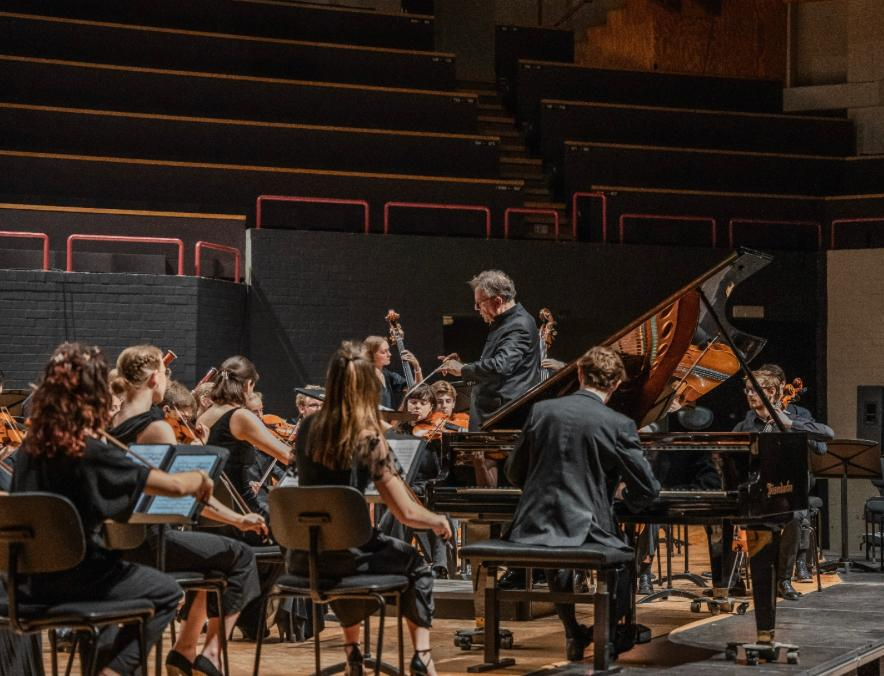
Orquestra Cluster Philharmonic
Participei, em 2024, de um projeto beneficente em Leuven (BE), “Melodias de Compaixão” para as vítimas das enchentes, em um comitê organizado para arrecadar fundos para enviar aos desabrigados. Foi um concerto, um evento único, com a Orquestra Cluster Philharmonic, sob a regência do maestro Michel Tilkin e os pianistas Felipe Novellino, Sylvia Thereza e eu. Então isso foi muito especial, porque ela é uma excelente professora e grande pianista. E abraçou essa causa. Cada um tocou um movimento do Segundo Concerto do Beethoven.
Ao final, a orquestra tocou ainda mais algumas obras e todo o valor arrecadado foi convertido para projetos no Rio Grande do Sul.
As Mudanças Pelo Mundo
Eu mudo de país como opção pela continuidade de um tipo de aprendizado específico e, então, as diferenças culturais ficam marcantes.
Porque a gente aqui no Brasil, é muito “a gente”, né? É muito chegado, muito aberto, muito afetuoso, interessado em saber… Mesmo quem a gente não conhece tão bem, a gente tem interesse em conhecer. E nessas culturas mais ao norte da Europa, nem sempre é assim. Para mim foi uma diferença cultural que eu me adaptei bem, não foi algo que me desestabilizou. Mas ao longo do tempo, agora já estando lá há 6 anos, eu sinto mais essa diferença, sinto mais saudade. Acho que pesa um pouco mais com o tempo. Mas acho que também tem pontos positivos, e eu encontrei muitas pessoas que viraram amigos muito queridos e muito presentes, muito solícitos. Mas no geral, no dia a dia, não é como aqui o calor nosso. Isso foi o quesito que mais me chamou a atenção
Sou Cidadão Do Mundo, Mas Sou Mineiro!
Na Bélgica têm os locais e projetos de apoio aos alunos que são reconhecidos pela universidade, que têm a qualidade requisitada para abrigar um estudante, mas não são bancados pela universidade. Orientam sim, têm um departamento só para orientar a questão de trabalho, de visto, de adaptação, psicólogo à disposição… Toda essa estrutura. Só não é custeado pela universidade. Mas tem incentivos, como o restaurante universitário e casas de estudantes com preços mais acessíveis. A questão é sempre permanecer, né? Enquanto está estudando tem um amparo bem razoável, depois que se torna profissional muda muito: você tem que se profissionalizar, se transformar em empresa.
Desejo continuar por lá, pelo menos, até o final da minha formação, fazer um doutorado.
Pro futuro é difícil falar, porque é muita coisa que vai acontecendo, vai envolvendo. Tenho muita saudade do Brasil, tenho vontade de voltar para contribuir com o que aprendi, que acho que vale a pena, mas tenho também a vontade de continuar lá, fazer uma carreira internacional.
Pela proximidade geográfica de todos os países facilita muito essa questão de transitar, fazer contatos, projetos, movimentação… Sou cidadão do mundo, mas sou mineiro!
Concertos
Também fiz frequentemente vários concertos. Este ano colaborei com um pianista holandês chamado Marcel Worms, que tem vários projetos de gravação de compositoras judias menos conhecidas, da época da Segunda Guerra (1939-1945). Muito resgate disso. A gente se encontrou por causa do meu projeto da música do Renato De Aguiar, e a gente tocou junto a quatro mãos, fizemos um programa de concerto. Toquei na própria Bélgica em diferentes house concerts, como saraus em casas de pessoas que têm instrumentos de época.
No exercício final do meu primeiro mestrado, teve um projeto especialmente interessante, onde regi do piano o 4º Concerto de Beethoven. Ou seja, toquei com um grupo de 6 pessoas, um conjunto de cordas e, na ausência de um regente, eu mesmo dava os sinais com a cabeça ou do jeito que dava. Com responsabilidade compartilhada: os músicos precisam saber melhor as suas partes, estar atento ao grupo. Eles leem as partituras, eu toco tudo decorado. Mas os músicos normalmente podem ler.
Tivemos a oportunidade de tocar na casa de um senhor que tinha um piano de 1855! Ainda original, com toda a mecânica original. Tive a possibilidade de ensaiar no mesmo dia. E foi muito interessante essa experiência, até a nível do som, o volume muito mais baixo do que o nosso piano atual. Os locais eram mais acolhedores, para uma plateia de 30 a 40 pessoas.
Apresentações
Mateus Fonseca está em constante atividade, tendo participado de masterclasses com os pianistas Maria João Pires, Manuela Gouveia, Boris Berman, Josep Colom, Eugen Indjic, Jacob Katsnelson, Nikolai Demidenko, Christian Pohl, Marisa Lacorte, Luiz Senise, Mirta Herrera, Cristian Budu, entre outros. O jovem apresentou-se ao longo de sua trajetória em recitais no Brasil, Portugal, Suíça, Alemanha, Polônia, Holanda e Bélgica.
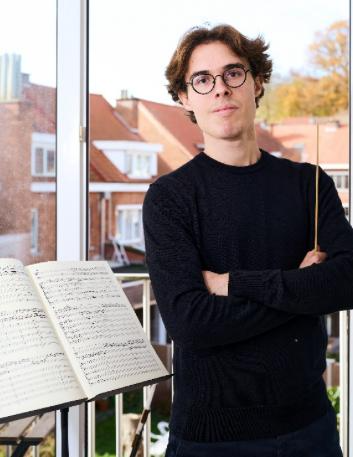
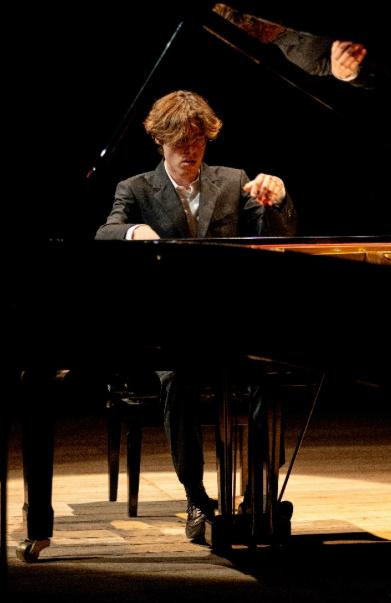
Foto: Niels Bots Foto: Frederico Samarane
Prêmios
Em 2017, 2019, recebeu Prêmio Jovem Músico do Banco do Desenvolvimento de Minas Gerais, Belo Horizonte (BR).
Em 2019, recebeu uma menção honrosa no “XII Concurso Latino Americano de Piano Professora Edna Bassetti Habith”, em Curitiba (BR).
Em 2023, recebeu um prêmio das Jeunesses Musicales de Fribourg pelo “brilhante resultado no quadro de seu recital de bacharelado, e em particular pela apresentação do programa de concerto”.
Em 2023, “Prix des Jeunesses Musicales de Fribourg”, Fribourg (CH).
A Música Que Ressoa Na Memória
Em depoimento abaixo Mateus Fonseca nos brinda com uma declaração de amor à música:
Para mim a música é um meio de vida. Um jeito de olhar para as coisas e de sentir o mundo que me cerca. Com ela, aprendo cotidianamente várias lições: que para toda dissonância há uma resolução possível; que a mesma nota pode comunicar as mais diversas emoções de acordo com as intenções de quem a toca; que existe um saber da mente e um do corpo, mas que a harmonia mais bela vem quando ambos tocam juntos; e que ter técnica é essencial, mas que sem fé não há som que ressoa na memória. Aprendo que ser músico começa por cultivar ouvidos aptos a ouvir.
Um griot africano, Sotigui Kouyaté, uma vez disse uma frase que me tocou profundamente: “escutar é estar sensível ao outro”. Isto traduz bem o que entendo pelo nosso papel de músico. Estar sensível não apenas à matéria musical, imprescindível ao nosso fazer, como também às pulsações dos nossos próprios organismos, aos ritmos da vida – muitas vezes em contraponto, e à presença e necessidades daqueles e daquelas que estão ao nosso redor. É dessa postura de abertura e entrega que jaz o “milagre musical”, que traduz em sons as nuances do espírito. A partir daí não somos mais nós quem faz a música, é a música que acontece – o que fazemos é apenas criar as circunstâncias para que ela aconteça…
Isso exige bastante treino, disciplina, dedicação, “vivência vivida”, e amor também – pelo que fazemos e para quem fazemos. A música é um fazer coletivo; sem encontros não há música. Por mais solitária que possa parecer a carreira de um pianista, é do encontro que ele vive, se nutre e se transforma: encontros consigo mesmo, é certo, mas também com seus mestres, colegas, ídolos, parceiros e, principalmente, com seu público. Quando estudo, a sós, é no meu público que penso; em todos aqueles e aquelas com quem vou partilhar minhas descobertas e delírios musicais. Por isso, nunca me sinto sozinho.
Gosto muito do contato que tenho com meu público, do carinho e entusiasmo que transbordam quando nos reencontramos, e sinto-me profundamente privilegiado pelos laços que criei nos lugares por onde passei. Por essas e outras mais razões, além do palco dou muito valor às iniciativas que propiciam encontros mais intimistas em torno da música, como saraus, house concerts, concertos experimentais e Schubertíades. Procuro, por minha conta, sempre que possível criar ocasiões como essas, convidando as pessoas a participar, e lembrando que música é também o exercício de uma presença.
Parafraseando o pintor Paul Klee e o poeta Alberto Caeiro: a música não representa o audível, ela torna audível – e a nossa maior riqueza é ouvir. Acredito numa música que mexe com os ouvintes, que ressoa na memória, que cria pontes, intimidades, que desenvolve linguagens, adentra temas, encontra laços e relações… uma arte que fornece um grande potencial transformador e que aponta caminhos possíveis, para fora e para dentro de nós. A meu ver, é aí que reside nossa contribuição enquanto músico.
Links / Áudio e vídeo de algumas apresentações
(*) MATEUS FONSECA – PIANIST AND CITIZEN OF THE WORLD!
Wilson Oliveira
When listing his leisure activities, our interviewee described himself as a *flâneur*.
A *flâneur* is someone who strolls unhurriedly and without a fixed destination through city streets, observing urban life, the people, and the surrounding architecture. He is guided by curiosity. He sees poetry and art in the ordinary details of daily life. He enjoys mingling with the crowd and observing the bustle without directly participating in it.
Yet, when looking at the unconventional path taken by Mateus Fonseca Junqueira—a 25-year-old pianist striving to hone his skills—one would say there is meticulous planning at work.
Here is what he told us:
“I come from a family of doctors. There are over fourteen of them, if I’m not mistaken. My grandfather was one of the founders of the Arapiara Hospital, which operated here for a long time. He was a great role model for the family. So, after him, many others became doctors.
I had three aunts who played the piano. From a very young age, I loved listening to it; I was curious. Sometimes I’d go over and play a little bit. I learned a few simple tunes from them. And when I was ten, my mother said…
‘Oh, son, why don’t you take lessons for an instrument? Pick an instrument.’ because they thought it was important for the child’s development—specifically, for the development of the imagination. And so, since I was in that environment with a piano, I mentioned that I was dying to learn to play. My family was very supportive of me from an early age. I was told:
“If you want to study music, you have to go to the best place to become a top-quality musician!”
They gave me tremendous support. My father, Rui Carneiro Junqueira, is an engineer, and my mother, Ana Paula Coutinho Fonseca, is a physician specializing in physical medicine and rehabilitation (physiatry). My brother, Gabriel (22), is pursuing a medical degree at the Federal University of Minas Gerais. Music and medicine are often linked!
I currently live in Leuven, Belgium. It’s very close to Brussels, in the Flemish part of the country. It is home to a centuries-old university—it just celebrated its 600th anniversary—making it one of the oldest in Europe. The music school is affiliated with the university but operates as a separate institution.
In 2025, he completed his Master’s degree in Piano Performance with distinction at the LUCA School of Arts in Leuven, under the guidance of the renowned pianist Sylvia Thereza, where he performed Beethoven’s Piano Concerto No. 4 while conducting from the keyboard. He is currently continuing his artistic training at the same institution with a second Master’s degree—this time in Chamber Music and Conducting—focusing more on the collective aspect and making music in a group setting.
The Beginning
Up until his teenage years, Mateus balanced formal education with his musical studies. He spent his childhood and adolescence at the Santo Tomás de Aquino School, where he studied from 2005 to 2018. He remained dedicated to both his academic subjects and the practical experience of working with musical scores and the keyboard. He participated in various activities, such as the Brazilian Astronomy and Astronautics Olympiad (2015), the “Velha Infância” Social Responsibility Project (2016), the Brazilian Physics Olympiad (2016 and 2017), and the Plant Morphology Laboratory (2017).
And that’s how it was; in the beginning, it was really something more informal—more about the joy of playing, you know? I also enjoyed improvising. When I was 12, I created some compositions and started writing music… So, there’s that… some sheet music I still have from back then. And that was it. I balanced it with school; I had weekly lessons.
Between the ages of 14 and 15, I began to take a greater interest in classical music after following the Chopin Competition in Warsaw online. Chopin’s work was my gateway into classical music; I was absolutely captivated by it.
That sparked a desire to study further so I could play pieces by other composers as well—that’s really what opened up my interest. So, I started looking for teachers and ways to deepen my experience.
At first, I was a student of Carla Reis, a professor at the University of São João del-Rei.I took private lessons with her from the time I was 14 until just before I left for Europe.
The Importance of FEA – The Foundation for Artistic Education
At the same time, I discovered the Foundation for Artistic Education (FEA), which became like a second home to me. I studied there from 2017 to 2019. My first contact with the Foundation was through a contemporary music workshop with Sérgio Rodrigo—a composer who currently lives in Strasbourg, France. That experience left a deep impression on me; it was truly significant.
It is a very open school. I studied piano, harmony, counterpoint, aural skills, and solfège. It’s like a crossroads where many musical genres meet—popular music, *chorinho*, contemporary, classical… Everything blends together, and people get to know one another. It’s a celebration of music and life.
I attended every concert I could—at least three a week. It is wonderful that we have this opportunity here in Belo Horizonte.
I gravitated toward classical music, and it was there that my interest in contemporary music began.
In July 2018, I participated in a festival called the Óbidos International Piano Week, held in a medieval town in Portugal. That edition brought together 40 young musicians from around the world for daily lessons with five renowned pianists. I was captivated by the experience. I was able to learn about the teachers’ philosophies and talk to friends and fellow pianists about their experiences. It inspired me to want to study abroad—especially in Europe, the cradle of classical music culture.
I always say: if I were studying samba, I’d never leave here! But for classical music, you need to go to the source. That was my goal. So, I started looking into it, and in 2018, at a concert here at Sala Minas Gerais, I met my future teacher, Ricardo Castro, who had come to perform. He guided me through the university admission process there—the repertoire I needed to prepare and the expected standards—covering everything from the practical exam and general theory test to sight-singing and aural skills.
After finishing high school, I spent a year in intensive preparation here under the guidance of teachers Carla Reis, Rubner de Abreu, and Rufo Herrera, as well as pianist Berenice Menegale, at the *Fundação de Educação Artística* (Foundation for Artistic Education). These people were incredibly helpful, and I am eternally grateful to them because the instruction there is of the highest quality. I realized this more and more once I was abroad and saw musicians from all over the world; the training I received at the *Fundação* is truly unparalleled.
I am so grateful for that opportunity. The teaching is rooted in the collective experience of making music—we learned by improvising together, feeling the music in our bodies, and singing. It’s not just about playing the piano with your fingers; it’s about internalizing the music and feeling the emotional impact of every nuance in the sound. That is what I developed at the *Fundação*.
Then I moved to Europe. I completed my undergraduate studies at the *Haute École de Musique de Lausanne* between 2020 and 2023. I lived in Fribourg, in the French-speaking part of Switzerland. It’s a bilingual city—French and German—though French is the dominant language in practice. I studied there with the Brazilian pianist Ricardo Castro; I was lucky enough to have a fellow Brazilian as a teacher!
While there, I also met the Brazilian-Swiss composer Renato de Aguiar. He is also from Minas Gerais and had studied at the *Fundação de Educação Artística* many years prior. He became a great friend of mine. In 2025, I recorded his piano pieces; we did the recording in Belgium. It was a CD—my first recording experience—a project titled “Entre Dois Mundos” (Between Two Worlds). It was a very special encounter, not only because we discovered we shared the same roots here in Minas, but also because of the complementary relationship between composer and performer, and the connection across separate continents. Hence the title “Entre Dois Mundos,” which brings all these elements together.
He also studied at the University of Freiburg and settled there; it’s been over 35 years now. He’s staying there, indeed. With the CD, we documented his works—over forty tracks. Most are short, high-quality pieces. It is a way to preserve Brazil’s musical memory, building bridges of recognition and appreciation between international institutions and the vast sonic heritage of Minas Gerais and Brazil.
He is still composing! In fact, at the concert I recently gave at Sesi Minas (2026), I played a piece he had composed recently.
Commentary by pianist Berenice Menegale
“Two musicians from Minas Gerais—separated by generations yet deeply in tune artistically—surprise us with an expressive, effective, and intelligent piano performance of an original series of micro-pieces and epigrams.
The creator of these pieces, composer Renato De Aguiar, shows us how—much like poetry—a musical miniature captures an idea, concentrates a fleeting impression, anchors an evocation, or launches an impulse toward the future. These are ‘minute-long’ pieces: crafted and beautiful, deliberate and inspiring.
Mateus Fonseca treats his instrument with affection, recalling that tradition of the piano as a confidant—a favorite of so many composers for improvisation and small-scale forms. His interpretations are faithful and precise, yet never lacking in imagination or humor.”
Teaching Experience
I teach at two schools. In Dutch, actually! It’s a passion of mine to see how different cultures think and express their feelings—you know? And *how* they express them.
So, in addition to teaching at these schools, I perform frequently. I place great importance on social engagement and expanding access to music.
Social Projects Abroad
I am a founder and member of the “Le(u)vende Klanken”, a group of musicians that organizes house concerts. Currently, in Leuven, Belgium, and the surrounding area, we hold performances at nursing homes and schools—such as the Tander School, which serves children with intellectual and cognitive disabilities (including autism, ADHD, and dyslexia). These are conditions that are clearly identified. It is an ongoing project; we started in the first semester of this year, and we perform four times a month…
It is entirely voluntary work. This is a genuine social project that I organized in partnership with the school; initially, it was completely voluntary—an effort to bring music to these people. It provided a valuable experience for a total audience of 900 people, starring a group of 40 students who participated during that first semester—in addition to my own performances at every session. For them, it was a wonderful activity, allowing them to play in environments with less… …less tension and fewer of the formal expectations found in a concert hall. This allows for a more open, freer kind of interaction—something many have described as beneficial to the music-making process. It shifts the focus toward others—listening and sharing—rather than on oneself or on how others might judge. The aim is to bring music to audiences that has less opportunities to go to a concert house, with the certainty that quality music, when shared with attention and respect, contributes to the well being of everyone present. Music is treated not only as an artistic practice, but also as a form of presence and human encounter, based on listening, caring and sharing. The project has been well-regarded and warmly received by the institution; everyone was very grateful. I don’t think it’s common there to have volunteer or purely charitable projects like this.
A social project for Brazil
In 2024, I took part in a charity project in Leuven, Belgium, called “Melodies of Compassion” for flood victims; I served on a committee organized to raise funds for those left homeless. It was a unique concert event featuring the Cluster Philharmonic Orchestra, conducted by Michel Tilkin, with pianists Felipe Novellino, Sylvia Thereza, and myself. It was a very special experience, as Sylvia is an excellent teacher and a great pianist who fully embraced the cause. Each of us played a movement from Beethoven’s Second Piano Concerto.
At the end, the orchestra performed a few more pieces, and all the proceeds went toward relief projects in Rio Grande do Sul.
Changes around the world
I move to different countries to pursue specific types of learning, and the cultural differences become quite striking.
Here in Brazil, there are so many people, right? We are very close, open, and affectionate; we’re interested in others—even people we don’t know well, we want to get to know. In Northern European cultures, it isn’t always like that. I adapted well to that cultural difference; it didn’t unsettle me. However, over time—having lived there for five years now—I feel the difference more acutely and miss home more. I think the weight of it grows a bit as time goes by. But there are positives, too; I’ve met many people who have become very dear, supportive, and present friends. Still, in general, day-to-day life lacks the warmth we have here. That was the aspect that stood out to me the most.
I’m a citizen of the world, but I’m a *Mineiro*!
In Belgium, there are local student support initiatives recognized by the university—meeting the required standards to host a student—but they aren’t funded by the university itself. They certainly provide guidance; there is a department dedicated to advising on work, visas, and cultural adjustment, and psychologists are available—the whole support system is there. The university doesn’t cover the costs, though. However, there are incentives, such as the university cafeteria and affordable student housing. The real challenge is staying there, you know? While you’re studying, you have a decent level of support, but things change a lot once you become a professional: you have to professionalize yourself and essentially operate like a business.
I want to stay there at least until I finish my training—I plan to do a PhD.
It’s hard to talk about the future because so many things happen and evolve along the way. I really miss Brazil and want to return to contribute what I’ve learned—I think that’s worthwhile—but I also want to stay there and build an international career.
The geographical proximity of the countries makes it much easier to move around, network, work on projects, and stay mobile… I’m a citizen of the world, but I’m from Minas Gerais!
Concerts
I also performed frequently. This year, I collaborated with a Dutch pianist named Marcel Worms, who has several projects recording works by lesser-known Jewish female composers from the World War II era (1939–1945). It involves a lot of rediscovering that music. We met through my project on Renato De Aguiar’s music; we played four-hand piano together and put together a concert program. I performed in Belgium at various “house concerts”—soirees held in the homes of people who own period instruments.
For the final project of my first master’s degree, there was a particularly interesting undertaking where I conducted Beethoven’s 4th Concerto from the piano. In other words, I played with a group of six people—a string ensemble—and, in the absence of a conductor, I gave the cues myself with nods or whatever method worked. It involved shared responsibility: the musicians need to know their parts thoroughly and stay attuned to the group. They read the scores, whereas I play everything from memory—though musicians are usually allowed to read the music. We had the opportunity to play at the home of a gentleman who owned an 1855 piano! It was still in its original condition, with all the original action. I was even able to rehearse on it that same day. It was a fascinating experience—especially regarding the sound, as the volume was much lower than that of modern pianos. The settings were more intimate, suited to an audience of 30 to 40 people.
Performances
Mateus Fonseca is constantly active, having participated in masterclasses with pianists Maria João Pires, Manuela Gouveia, Boris Berman, Josep Colom, Eugen Indjic, Jacob Katsnelson, Nikolai Demidenko, Christian Pohl, Marisa Lacorte, Luiz Senise, Mirta Herrera, and Cristian Budu, among others. Throughout his career, the young pianist has given recitals in Brazil, Portugal, Switzerland, Germany, Poland, the Netherlands, and Belgium.
Awards
In 2017 and 2019, he received the Young Musician Award from the Development Bank of Minas Gerais (BDMG) in Belo Horizonte (Brazil).
In 2019, he received an honorable mention at the “12th Professor Edna Bassetti Habith Latin American Piano Competition” in Curitiba (Brazil).
In 2023, he received an award from Jeunesses Musicales de Fribourg for his “brilliant performance during his bachelor’s recital, and particularly for the presentation of the concert program.”
In 2023, “Prix des Jeunesses Musicales de Fribourg,” Fribourg (Switzerland).
Music That Resonates in Memory
In the statement below, Mateus Fonseca shares a declaration of love for music:
“For me, music is a way of life. It is a way of looking at things and feeling the world around me. Through it, I learn various lessons every day: that for every dissonance, there is a possible resolution; that the same note can convey a wide range of emotions depending on the performer’s intentions; that there is knowledge of the mind and knowledge of the body, but the most beautiful harmony arises when both play together; and that while technique is essential, without faith, no sound resonates in the memory. I learn that being a musician begins with cultivating ears capable of truly listening.
An African griot, Sotigui Kouyaté, once spoke a phrase that deeply moved me: “To listen is to be sensitive to the other.” This perfectly captures my understanding of our role as musicians. It means being sensitive not only to the musical material—essential to our craft—but also to the pulses of our own bodies, to the rhythms of life (often in counterpoint), and to the presence and needs of those around us. It is from this stance of openness and surrender that the “musical miracle” arises, translating the nuances of the spirit into sound. From that point on, it is no longer we who make the music; the music simply happens—all we do is create the circumstances for it to unfold…
This demands a great deal of practice, discipline, dedication, “lived experience,” and love, too—love for what we do and for those we do it for. Music is a collective endeavor; without encounters, there is no music. However solitary a pianist’s career might seem, it is through encounters that the artist lives, finds nourishment, and undergoes transformation: encounters with the self, certainly, but also with mentors, colleagues, idols, collaborators, and, above all, the audience. When I practice alone, it is my audience I think of—all those with whom I will share my musical discoveries and flights of fancy. That is why I never feel alone.
I deeply value the connection I have with my audience, the warmth and enthusiasm that overflow when we meet again, and I feel profoundly privileged by the bonds I have forged in the places I have visited. For these reasons and more, I place great value—beyond the concert stage—on initiatives that foster more intimate musical gatherings, such as soirées, house concerts, experimental performances, and Schubertiades. Whenever possible, I take the initiative to create such occasions, inviting people to participate and reminding them that music is also an act of presence.”
To paraphrase the painter Paul Klee and the poet Alberto Caeiro: music does not represent the audible; it makes the audible manifest—and our greatest wealth lies in listening. I believe in music that moves listeners, resonates in memory, builds bridges and intimacy, develops languages, explores themes, and forges bonds and connections… an art form that offers immense transformative potential and points toward possible paths—both outward into the world and inward into ourselves. To my mind, that is where our contribution as musicians truly lies.




Respostas de 2
Caro Wilson, muitíssimo obrigado pela matéria maravilhosa e super cuidadosa que vocês escreveram. Um agradecimento especial também ao Francisco e à Odette ! Forte abraço,
Muito bom conversar com você. Mateus! Muito obrigada por nos conceder esta entrevista